
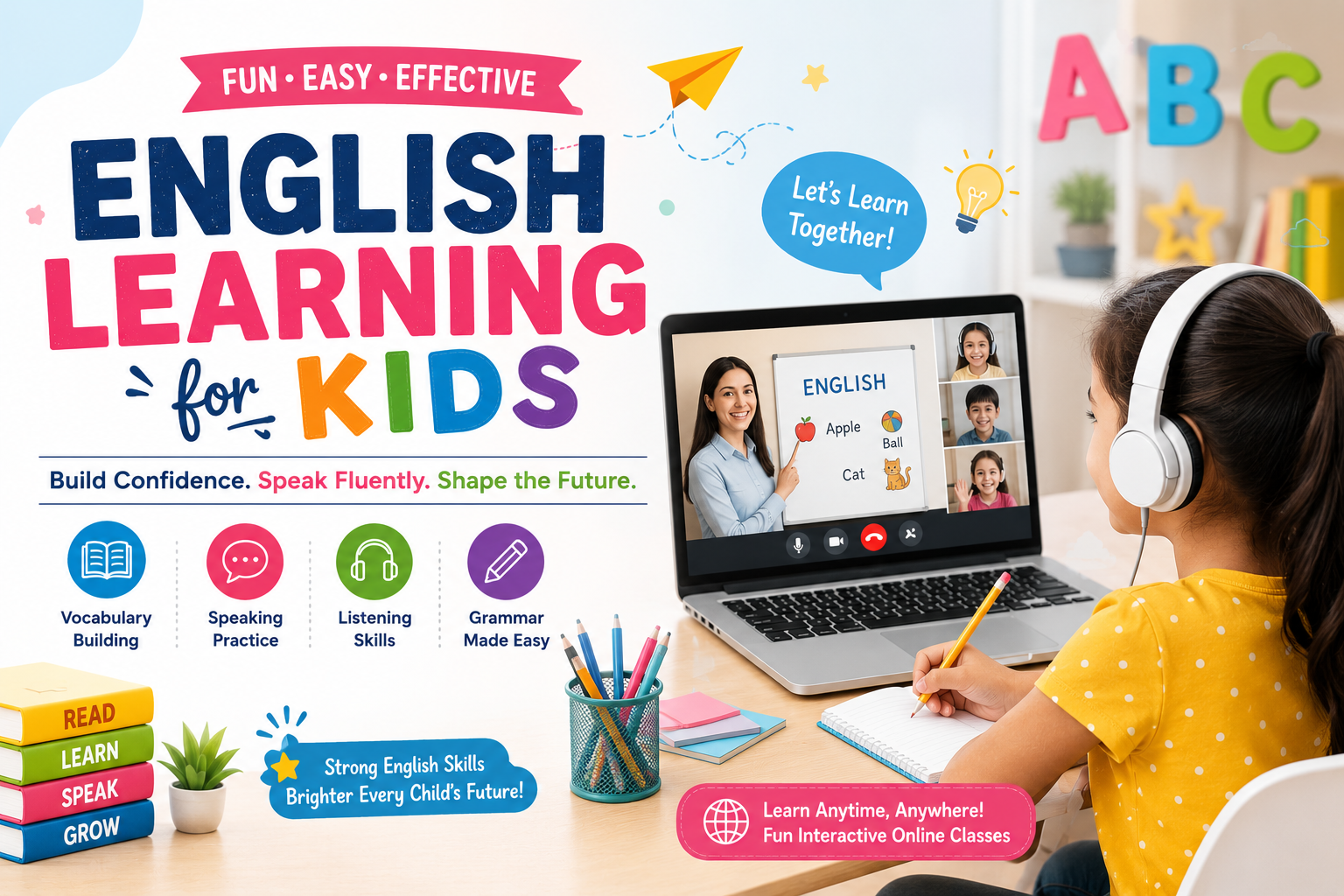
English is one of the most important skills children develop during their early school years. Strong English skills can help children communicate clearly, understand what they read, express their ideas and feel more confident in the classroom. For Australian families looking for flexible ways to support their children, online learning classes for kids AU can provide an engaging way to practise English from home.
From reading and spelling to grammar and writing, children can develop their language skills through regular practice, interactive learning and age-appropriate activities.
Why Is English Learning Important for Kids?
English learning for kids is about much more than memorising vocabulary or completing worksheets. Children need opportunities to develop their reading, writing, listening and communication skills.
Strong English skills can help children:
- Build a wider vocabulary
- Improve reading comprehension
- Understand grammar and sentence structure
- Develop better spelling skills
- Express their thoughts clearly through writing
- Communicate more confidently
- Develop positive learning habits
When children enjoy the learning process, they are more likely to stay motivated and practise regularly.
Reading: Building a Strong Foundation
Reading is a key part of English development. Regular reading exposes children to new vocabulary, sentence structures and different ways of expressing ideas. It can also improve comprehension and help children become more confident readers.
Parents can encourage reading by providing materials that are appropriate for their child’s age and interests. Children can also benefit from activities that ask them to identify important information, understand meanings and explain what they have read.
Simple conversations about reading can make a difference. Parents might ask, “What did you learn?” or “Can you explain this in your own words?” These questions encourage children to think about what they are reading rather than simply reading the words.
Grammar: Understanding How Language Works
Grammar helps children understand how words and sentences work together. Learning grammar becomes easier when children can see how grammatical rules are used in real communication.
Children can practise identifying nouns, verbs, adjectives and other parts of speech. They can also learn how sentence structure changes meaning and practise creating their own sentences.
Online learning can provide children with structured grammar exercises and activities that they can complete at a suitable pace. This can be particularly helpful for parents who want to provide additional English practice outside school.
Spelling: Learning Through Regular Practice
Spelling develops through regular exposure, repetition and practice. Children can improve their spelling by reading frequently and practising commonly used words.
Interactive exercises can make spelling practice more enjoyable. Word games, quizzes and short activities can help children recognise spelling patterns and remember new vocabulary without making learning feel repetitive.
Parents can also encourage children to use new words in sentences. This helps connect spelling with vocabulary and communication.
Writing: Helping Kids Express Their Ideas
Writing gives children an opportunity to put their English skills into practice. Younger children can begin with simple sentences, while older children can gradually develop paragraphs, descriptions and longer pieces of writing.
Creative activities can make writing more interesting. Children could describe their favourite activity, write about their day or create a short piece based on a picture or topic.
The important thing is to encourage children to express their ideas while gradually improving spelling, grammar, vocabulary and sentence structure.
How Ti Books Can Help Kids Learn English
Ti Books can be part of a child’s broader English-learning journey by providing opportunities to practise and develop language skills in an engaging learning environment.
For children, effective English learning should involve regular practice and activities that encourage them to understand and use the language. Resources such as Ti Books can support this process by giving children additional opportunities to engage with English outside their regular school lessons.
Parents can combine Ti Books with everyday English activities at home. For example, children can practise new vocabulary, work on sentence construction, read age-appropriate material, complete writing exercises or discuss what they have learned.
The aim is to make English practice a regular and enjoyable part of a child’s learning routine rather than something they only do when preparing for a test.
Making English Learning Enjoyable at Home
Finding effective online learning classes for kids AU can give Australian families another way to support children’s education outside the classroom. However, online learning works best when it is combined with regular practice and encouragement at home.
Parents can create a simple English-learning routine by setting aside time for reading, vocabulary, spelling and writing activities. Encourage children to ask questions, experiment with new words and communicate their ideas.
Most importantly, English learning should feel achievable and enjoyable. With consistent practice and the right learning resources, children can gradually strengthen their reading, grammar, spelling and writing skills.
For Australian families, combining school education with suitable online learning resources can help children build confidence and develop English skills that support them both inside and outside the classroom.